|
Whole Body Cryopreservation / Cryofixation
Consent for Cryopreservation / Cryofixation
Laws to cryogenically process in the United Kingdom
In the United Kingdom, cryopreservation can only legally begin after a person has been declared legally dead. The law assumes that death is final and permanent, and there are currently no laws that specifically regulate the practice of human cryopreservation itself
Legally Dead : Individuals undergoing cryopreservation are considered legally dead in the UK. The legal definition of death is based on the irreversible cessation of brain stem function, as determined by two senior doctors using the  Academy of Medical Royal Colleges' Code of Practice. Academy of Medical Royal Colleges' Code of Practice.
Unregulated : The procedure is not regulated by the Human Tissue Authority (HTA), as the relevant legislation (the Human Tissue Act 2004) did not anticipate the practice of preserving entire bodies.
Consent and Authority : A person wishing to be cryopreserved must have legally binding arrangements in place before death. Crucially, the person with the right to take possession of the body after death (usually the executor of the will) must have the legal authority and willingness to carry out the deceased's wishes. Appoint a lawyer to handle post death, contract paperwork, power of attorney.
Coroner Involvement : The death must be registered, and a Coroner report : Medical Certificate of Cause of Death (MCCD) issued. Hospital consultant for end of lif, verification of expected death, medical examiner checks paperwork, register of the council, release form confirmed death. On receiving patient the standard process is shinging a light on the eyes to check if the pupil contracts.
Lividity or livor mortis, is the purplish-red skin discoloration appearing on the lower parts of a body after death, caused by gravity pooling blood in capillaries because the heart has stopped pumping.
Post-mortem purge is the expulsion of dark, foul-smelling fluids (blood, cellular debris, bacteria) from the mouth, nose, and other orifices of a decomposing body, caused by internal gas pressure from gut bacteria breaking down tissues
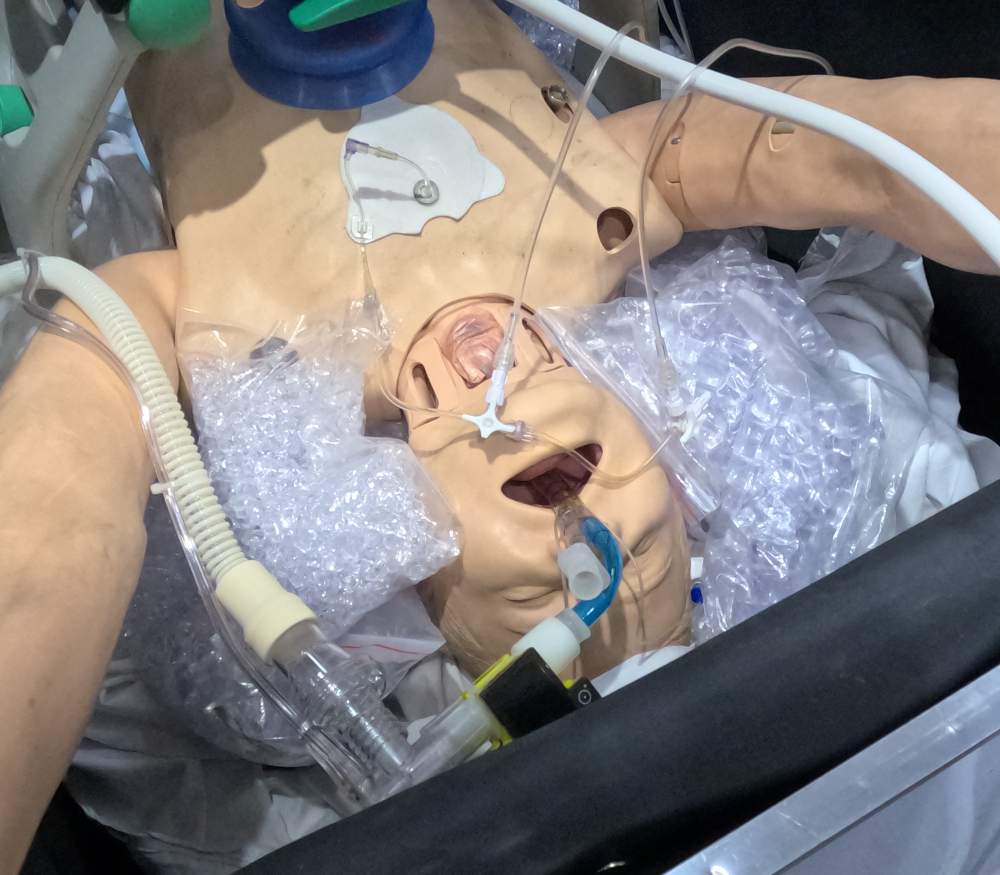 The emergency procedure starts with plenty of warning. You should contact us as soon as you have a terminal or critical diagnosis. We would then make local arrangements with the hospital or GP, a local mortuary facility (which serves as a surgical location for cryoprotective perfusion) and organise our team. We would consult with medical staff and aim to deploy 24-48 hours before death is expected. Upon clinical death, we would transfer the patient to the ambulance, begin cooling in an ice bath, maintain cardio-respiratory support and administer medications to stabilise biochemistry. The patient is transferred to the mortuary for blood wash out, perfusion and then cooling in dry ice. After several days of dry ice cooling and completion of the necessary international paperwork, the patient is transfered by air to Alcor. They will then be cooled to liquid nitrogen temperatures before being placed in long term storage.
Laura Deming - Until : Until is building a pause button for biology, so every single transplantable organ finds a recipient and saves a life.
Post life medical procedure
Cryofixation : Plunge freezing / High-pressure freezing / Freeze-drying
- Make local arrangements with the hospital or GP. We will deal with the hospital, etc regarding jumping through the necessary hoops
- Consult with medical staff and aim to deploy 24-48 hours before death is expected
- It is important to avoid death becoming reportable to the coroner where possible. If death is expected and a patient is under continuous medical care, the coroner is not usually involved. However, deaths are reportable, for example, if they are unexpected, unattended, accidental, the cause is unknown or the patient hasn't seen their doctor/consultant within the previous 14 days. If a death is reportable, there are steps we can take to mitigate the situation.
- The fact of death needs to be confirmed by the doctor/hospital in order for them to be able to issue a cause of death certificate. There is no legal requirement for the certificate to be issued or death registered before we begin cryonics procedures. However, most hospitals require the certificate to be issued before we leave the hospital.
- Upon clinical death, maintain cardio-respiratory support and administer medications to stabilise biochemistry. Transfer the patient to a private ambulance, begin cooling in an ice bath for 2 to 3 hours after death. This reduces their core temperature to between 10 and 20 degrees centigrade. Once at this temperature, metabolic demand his substantially reduced and we are able to remove the patient from cardiac respiratory support to carry out perfusion.
- Cardio-respiratory support : For payients with low bone density the hospital applies a "Do Not Resuscitate (DNR)" order or DNACPR (Do Not Attempt Cardiopulmonary Resuscitation) Cryonics use a mechanical CPR device which applies a lot of force but the alternatives would be a " Automated External Defibrillator (AED)".
- A local mortuary facility (which serves as a surgical location for cryoprotective perfusion), transfer the patient to the mortuary for blood wash out, perfusion and then cooling in dry ice
- Heparin is a fast-acting anticoagulant (blood thinner) medication used to prevent and treat blood clots in veins, arteries, the heart, and lungs. It is administered by injection or intravenously because it cannot be absorbed by the digestive system
- Blood Replacement : When the heart stops, circulation stops and the blood is no longer being pushed through out the body. Livor mortis (or postmortem lividity), which is the settling of blood in the lower (dependent) portion of the body after death. After death dehydration occurs almost immediately. The surface of the eyeball starts to dry out. The cornea'a lose that wet reflective look. The eyes flatten and they dull. Fluid needs to be regulated in the body. A perfusion machine takes over the heart's function, pumping a chosen CPA solution into the vascular system to replace blood.
- Gradual CPA Introduction : Perfusion of the head only. This is done using a gravity fed system rather than a mechanical pump. The process begins with a blood washout followed by perfusion. The perfusate is delivered in 6 different concentrations. The steps are overlapped to prevent a sudden change of concentration. The target temperature for the patient during perfusion is -6 to +6 degrees centigrade. The CPA concentration is increased gradually, often with simultaneous cooling, to avoid osmotic damage and cell swelling/shrinkage, ensuring balanced water exchange. A certain amount if tissue shrinkage is unfortunately normal under current protocols. However, we take steps to minimise this such as perfusing slowly and not over-perfusing.
- Vitrification is the process of turning a substance into a glass-like, non-crystalline solid, often by extremely rapid cooling, used in fertility to freeze eggs and embryos by preventing damaging ice crystals. It's a cryopreservation method that solidifies cells into an amorphous state, preserving them for future use with high survival rates.
- Cryoprotectants are substances that protect living cells, tissues, and biological samples from freezing damage by preventing harmful ice crystal formation, allowing survival at low temperatures, and are crucial in medicine (organ banking, cell storage). They work by lowering water's freezing point and reducing ice formation through solute concentration or hydrogen bonding, with common examples including DMSO, glycerol, and ethylene glycol, though they must be non-toxic and ideally penetrate cells
- Dimethyl Sulfoxide Pharmaceutical grade DMSO is highly purified, often 99.9% pure, with contaminants like Dimethyl Sulfide (DMS) removed, making it virtually odorless and suitable for research
Name Tim Gibson
Email tim.gibson@cryonics-uk.org
Telephone 07905 371495
Web cryonics-uk.org
Long term cryonics storage
-
A building with 8-9 metres roof height
-
Two patient storage dewars, made to order. One will be the main storage container and a spare in case of leakage. New drawings will be needed as the current designs are for multiple patients.
-
A large liquid nitrogen storage tank to feed the dewar as the level drops
-
A contract with a liquid nitrogen supplier
-
An automated liquid nitrogen top up system
-
Back up generators for the top up system. UPS UK 3-phase plug Uninterruptible Power Supply
-
A nitrogen level monitoring and alarm system for the building
-
A winch system to load/unload the dewars
-
A nitrogen vapour cool down chamber, made to order. This cools the patient gradually to liquid nitrogen temperature before being placed in the dewar
-
A cryonics specialist to set this up correctly
Aldehyde fixation : is a chemical preservation method used in histology and cytology to halt decay and stabilize cell and tissue structures. It works by cross-linking proteins, primarily binding to amine groups on lysine residues. Common agents include formaldehyde and glutaraldehyde, which maintain cellular morphology for light and electron microscopy.
Future technologies in Biologicial revival
- Cryobiology is the scientific study of how extremely low temperatures affect living organisms, cells, tissues, and biological materials, focusing on preservation techniques like cryopreservation (freezing) to prevent damage from ice formation, using cryoprotectants like glycerol to protect viability for applications in medicine
-
The Canadian Wood Frog / Japanese Tree Frog can survive considerable freezing during winter, which in spring can return to normal function. They can go through these freeze and thaw cycles for many years, likely from anti freeze proteins.
- Seperatley a research team from the Japan Advanced Institute published a research paper December 2025 describing an innovative and promising approach to cancer treatment. They report on a bacterial species extracted from the gut of the Japanese Tree Frog that demonstrated a 100% cure rate in a mouse model of human colon cancer. All the untreated mice died; all the treated mice lived, and became resistant to this cancer thereafter. The bacteria (Ewingella americana) were handily cleared from the body of the mice, and they are unlikely to pose a danger to humans when this therapy is translated. Crucially important - the bacteria not only attack the tumor but also enlist the body’s own immune system to aid in the assault.
-
DNA can be successfully frozen, stored, and restored at standard freezer temperatures like –20°C or ultra-low temperatures like –80°C, and it can even be kept cryogenically in liquid nitrogen at –196°C
Storage Temperatures and Durations
Short to Medium Term (–20°C): Standard laboratory freezers set to QIAGEN guidelines keep DNA safe for months to years.
Long Term (–80°C): Ultra-low freezers stop most chemical and enzymatic reactions, making this a global gold standard for multi-year storage.
Cryogenic (–196°C): Liquid nitrogen storage preserves DNA integrity for decades.
Best Practices for Restoring DNA
Avoid freeze-thaw cycles: Repeatedly melting and freezing damages the strands. Make small sample portions (aliquots) to prevent this.
Use a proper buffer: Store DNA in a protective solution like TE buffer at a stable pH (around 8.0) to prevent degradation.
Thaw gently: Thaw frozen samples slowly on ice rather than at high heat to protect the molecular structure
|