Home

Proof of concept (PoC): Japanese tree frog (Dryophytes japonicus), using Gut microbiota (Ewingella americana) for bacterial cancer therapy and immunotherapy

Research

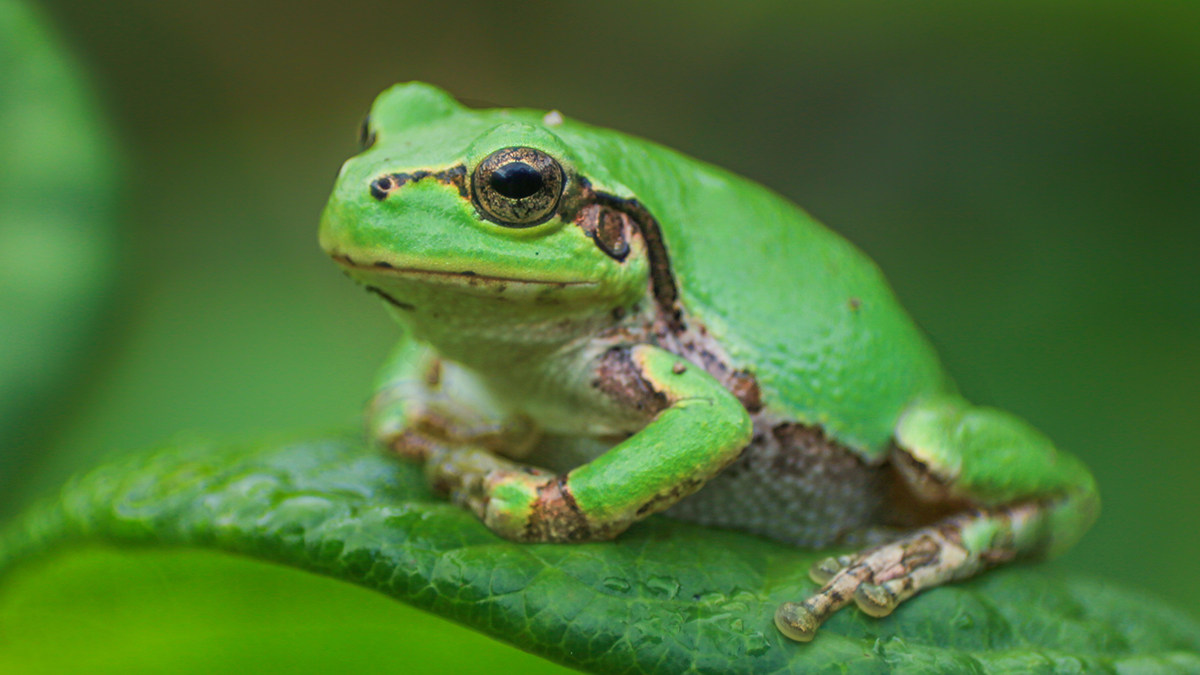
The Japan Advanced Institute published a research paper in December 2025 describing an innovative and groundbreaking approach to cancer treatment. They report on a bacterial species extracted from the gut of the Japanese Tree Frog which demonstrated in a mouse model a 100% cure rate of human colon cancer. All the treated mice lived and became resistant to this cancer thereafter; the untreated mice died. The bacteria (Ewingella americana) were conveniently rid from the body of the mice, and they are unlikely to pose a danger to humans when this therapy is translated.

Crucially important - the bacteria (Ewingella americana) not only attack the tumor but also enlist the body’s own immune system to aid in the assault. It may be that the bacteria (Ewingella americana) are well-adapted to reproduce inside the tumor, and they grow to a critical mass where the body’s immune system comes in to pounce on them; only then does the immune system notice and attack the cancer. "The underlying therapeutic mechanism encompasses selective tumor colonisation and proliferation by this facultative anaerobic bacterium, coupled with potent direct cytotoxic effects against cancer cells and comprehensive immune-mediated tumor suppression through coordinated activation of neutrophils, T cells, and B cells."

When the episode is ended, the tumor resorbed and the bacteria eliminated from the mouse system, the mouse immune system is left primed to prevent recurrence. Contrast this to the action of chemotherapy. Chemotherapy targets any cells that reproduce rapidly, not only the tumor but (visibly) the patient’s hair follicles and (invisibly) the patient’s immune system. When the dust clears, the patient is left in an immune-impaired condition, vulnerable not only to infection but to recurrence of the same cancer or a more aggressive one. Chemotherapy accelerates the GrimAge clock, and we all have anecdotal experience that it ages patients visibly.

The research group knew just what they were looking for. They were systematically exploring bacteria strains from the microbiomes of amphibians and reptiles for anti-tumor activity. All the tested bacterial strains were pre-tested for pathogenicity in mammals, and three candidates advanced to a stage of optimising treatment protocols in mice. Ewingella americana was the best of the three.

In the past, this same Japanese group has looked inside tumors for “oncolytic” bacterial strains that might already be well-adapted to parasitising a particular cancer. The enemy of your enemy is your friend. These results, too, have been promising. "Based on these considerations, we hypothesise that the gut microbiome represents a vast reservoir of bacterial diversity, encompassing strains with potentially exceptional antitumor properties that remain largely unexplored."

The human microbiome is known to have major effects on susceptibility to disease, including cancer, and remains an opportunity for exploring new therapeutic potential. Our gut bacteria manufacture many of the proteins that keep us healthy, as well as some that can make us sick. The Japanese author Eijiro Miyako e-miyako@jaist.ac.jp point out in their introduction that there is already a literature on human gut biota in relation to cancer. "The mechanisms underlying these microbiome-cancer interactions are remarkably diverse, encompassing direct genotoxic effects, chronic inflammatory processes, immune system modulation, and metabolic reprogramming of the tumor microenvironment."

Research in the intestinal microbiome is needed for treating human disease we don’t have enough understanding of interrelationships among species to be the basis for effective treatments.

The universe of bacteria and fungi remains an untapped resource which could be seminal for the future of medicine.

The last century of medical research, we have come to view the body through a biochemical lens. Our bodies are also ecosystems of symbionts, commensals, and parasites, each with multiple counter-balancing and reinforcing effects. We look for biochemical imbalances as the root of disease, when some diseases are better understood as ecological imbalances.


Process of anaerobic incubation

Example :


Questions on amphibian welfare


Ideal storage in Vivarium

Debris, leaf litter, rocks, and tall grass destroys the shady, damp hiding spots they need for protection. Being woken up, handled, or touched can cause stress. Anything that dries out their habitat, poisons their water, or removes their shelter "upsets" the balance of a frog's life, often leading to death.


Animal Health and Welfare Research Centre

Name :      Gary Miller
Email :      Gary.Miller@sparsholt.ac.uk
Address : Sparsholt College Hampshire, Westley Ln, Sparsholt, Winchester SO21 2NF

Seperate Holdings : Tropical Butterfly House Wildlife Conservation Park, Woodsetts Rd, North Anston, Sheffield S25 4EQ
Globally Holding : https://www.zootierliste.de/en/map.php?art=50903740&tab=tab_zootier

Japanese tree frog (Dryophytes japonicus) - No Subspecific status
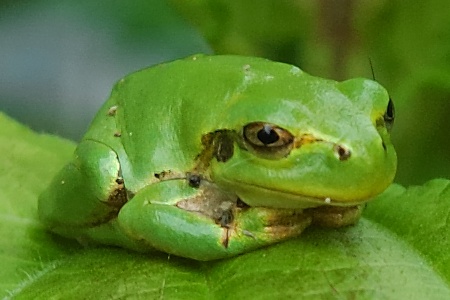
A tree frog is an amphibian. As part of the class Amphibia, they are ectothermic (having body temperature that varies with the environment). Vertebrate animals that typically start life as aquatic, gill-breathing tadpoles before metamorphosing into air-breathing adults. Can only be driven in booked vans, under certain conditions, not sent in the post like the USA.

  • The Japanese tree frog eats every 3 days
  • The Japanese tree frog are carnivores that prey on insects, ants, beetles, caterpillars, flies, and spiders.
  • The Japanese tree frog lives in a variety of habitats such as wetlands, forests, rivers, and mountains
  • The dorsal body of Japanese tree frog is green/brown and the ventral body (front subdivision) is white
  • Female Japanese tree frogs, on average, are larger in size compared to male.
  • The Japanese tree frog is only 3cm long, and lays ~ 1000 eggs, living ~ 6 years
  • Japanese tree frogs demonstrates the remarkable ability to withstand extremely cold temperatures, able to survive temperatures as low as −35 ℃ for up to 120 days
  • Japanese tree frogs have evolved special Anntoxin-like neurotoxins from their skin. Anntoxin is a 60-residue toxic peptide that inhibits ion channels such as tetrodotoxin-sensitive voltage-gated sodium channels (TTX-s). They are small proteins that can harm or even kill predators if they eat the frog's skin.
  • Some frogs do not chew, muscles in the stomach hold the insect, for later digestion in the small intestine
  • Humans research Japanese tree frogs in order to design wireless communication networks in order to improve efficiency in situations where no central communication hub is present. This area of science and development is termed "swarm intelligence"
  • Research laboratories wanting Japanese tree frog (Dryophytes japonicus) can purchase from us email : pr@printernational.co.uk


Legal disclaimer statement that limits or denies a party's responsibility (liability) for potential harm, errors, or outcomes related to information, services, or products provided, aiming to manage user expectations and reduce legal risk, common on websites (e.g., "not legal advice") and software (e.g., "I agree" for damages). To clarify what all users can and can't rely on, preventing misunderstandings and potential lawsuits by stating content is informational only, not professional advice, and users act at their own risk, often found in contracts, terms, and email footers

Limit Liability : Protects the issuer from claims of negligence or faulty products/advice

Inform Users : Alerts individuals to potential risks, limitations, or conditions of use

Manage Expectations : Clarifies the scope of information provided (e.g., general guidance, not personalied advice)